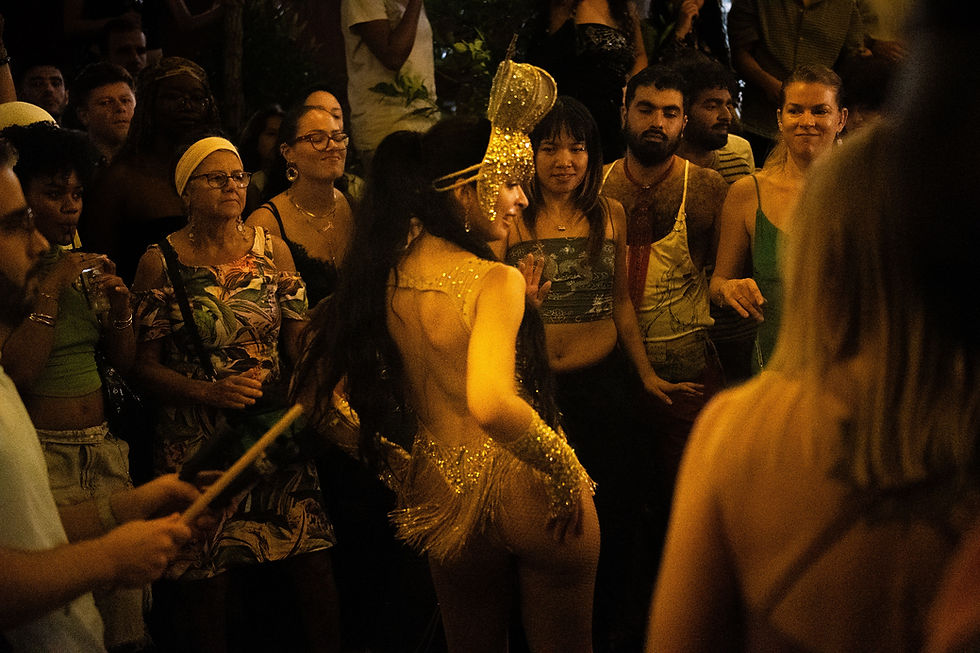
About

PURO SUCO is a new samba dance school in Rotterdam.
In Brazil, puro suco (‘pure juice’) refers to the real essence of something.
Here, that something is Rio-style samba no pé: the dance style of the passistas at the heart of Rio de Janeiro’s Carnaval.
We teach it the way we learned it, straight from the source.
My name is Vicky and I founded PURO SUCO. My mission is to continue growing real samba no pé in the Netherlands, truthful to its roots, to give this culture the space and representation it deserves.
I was born in the state of Maranhão to a Brazilian mom and a Dutch dad, and raised here in the Netherlands. For me, samba is a bridge between my two worlds, and a way to connect to the multitudes of Brazilian culture beyond my own upbringing.
Urban dance styles have been my passion since I was 8, but samba has since taken over completely and I have gone all in, training with mestres and passistas from Rio's escolas de samba, both in person and online. In February 2026, I paraded in Rio's Carnaval as passista, and I am heading back again for 2027. I will always continue studying samba myself, as it is an ever-evolving art with endless lessons to teach us.
In my classes, I promise to leave you with more than steps. The goal is a well-rounded community of dancers who know what they're doing and why, who express themselves freely, and who feel the culture in the movement, not just the choreography.
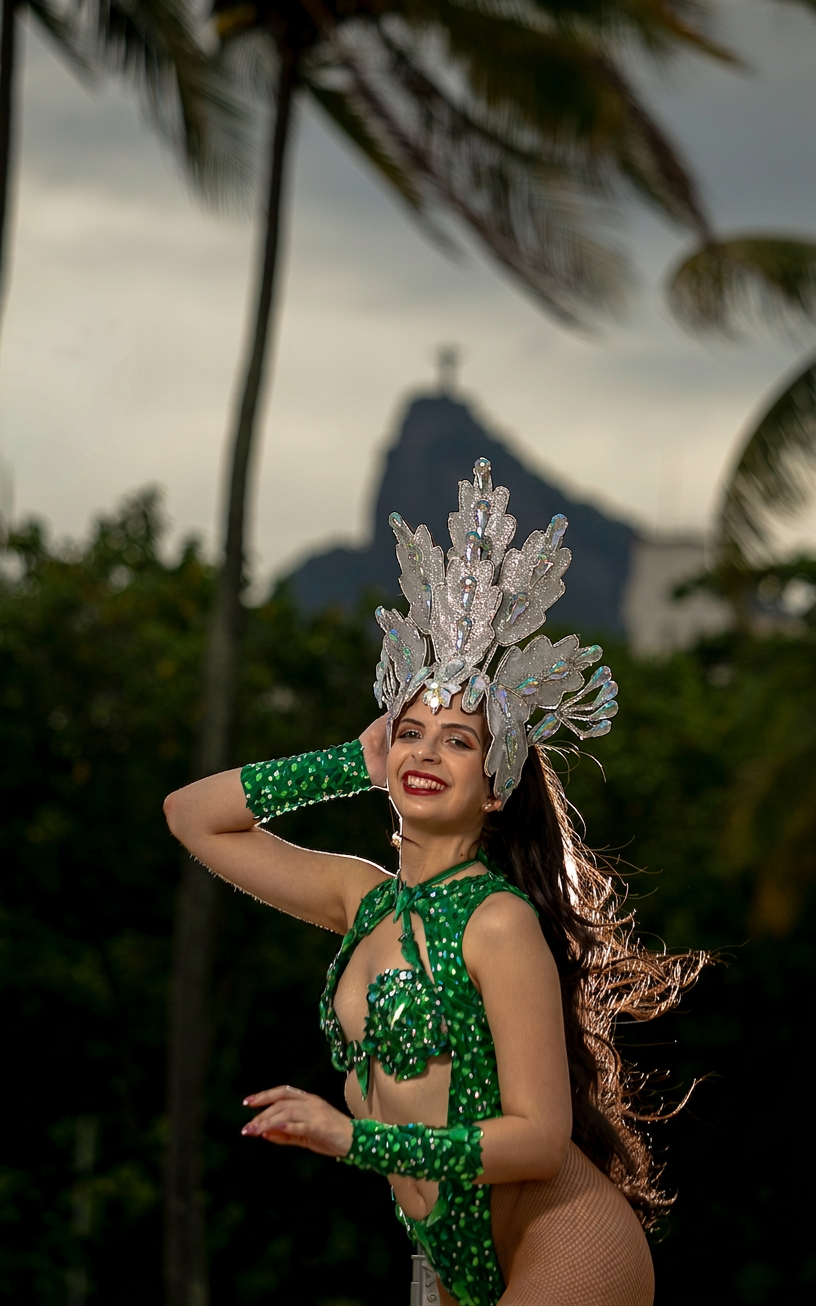
Not sure whether this is for you?
Whether you wanna arrasar at the roda de samba, dream of parading and performing with confidence, or simply want to annoy your downstairs neighbour like I do... Trust me, this is your place.
what is samba no pé?
Samba no pé ("samba in the feet") is a solo Brazilian dance built on fast, intricate footwork danced to the rhythm of the drums. It's the style you see danced by the passistas (dancers) in the parades of Rio de Janeiro's Carnaval, and in more casual forms at samba gatherings like roda de samba and pagode.
Its roots run deep in Afro-Brazilian culture. Samba grew out of circle dances, drumming traditions and religions that enslaved Africans brought to Brazil, and transformed across generations into many different styles.
After the abolition of slavery in 1888, many Afro-Brazilians, a large number of them from Bahia, settled in Rio de Janeiro. It was in these Afro-Brazilian communities that the Rio-style samba took the shape we know today.
The first escolas de samba (samba schools) formed in these communities in the 1920s and became the beating heart of Rio's Carnaval, where samba no pé has transformed into its modern form.
However, when samba first arrived in Rio, it was stigmatized and treated as a crime: police broke up gatherings and confiscated instruments in Rio's Afro-Brazilian communities. It survived anyway, kept alive by the tias baianas (Bahian aunties) and the Black communities of Rio. Then, in the 1930s, the government began to embrace it, on the radio, in Carnaval, as a picture of the nation, and within a generation samba went from something you could be arrested for to Brazil's national symbol.
This is all part of why we dance with respect: samba is ancestral, spiritual, and had to fight to survive.
Come learn more about this impressive art in our classes.